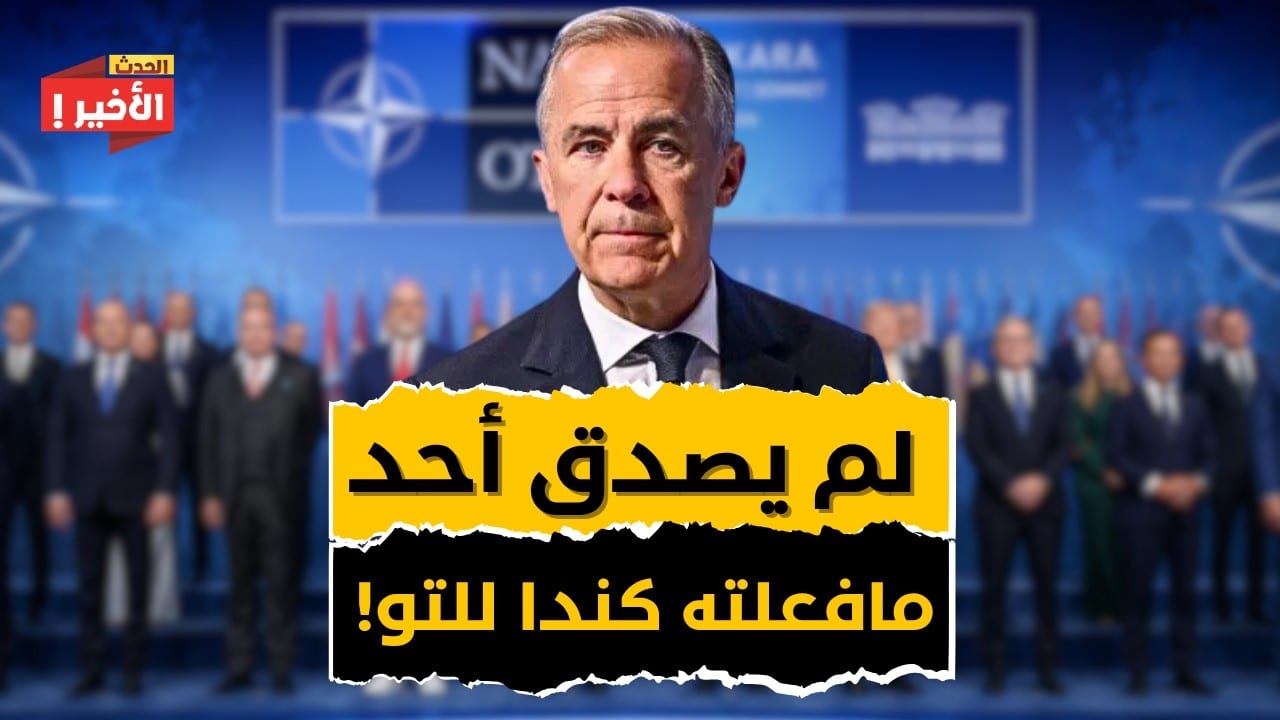
Recent NATO deliberations have reshaped global defence spending patterns, with Canada announcing a sharp increase in military commitments alongside a landmark agreement with Germany for submarine supply valued at nearly 80 billion Canadian dollars. These moves represent a strategic pivot in alliance spending toward new production centers and intensify competition for major military contracts among European, American, and Asian suppliers.
Canada's Unprecedented Defence Expansion
The rise in Canadian defence expenditure marks a turning point in Ottawa's strategic posture. Canada has moved beyond its historical role as a peripheral NATO actor to become a central participant in the alliance's rearmament against Russian threats and China's expanding influence. This shift reflects multiple pressures: U.S. demands, particularly from the current administration, to increase NATO defence spending to 2 percent of GDP and in some cases to 3 percent; and the concrete threat posed by the ongoing war in Ukraine and the shifting balance of power in Eastern Europe.
This policy represents a fundamental departure from Canada's historical model of technical cooperation and diplomacy. Instead, Canada is building military capacity in the South Atlantic and the Arctic, competing with Russia for influence and strategic resources in polar regions.
The German Submarine Deal: A Victory for HDW and European Industry
Canada's selection of Germany as its exclusive submarine supplier carries deep economic and political significance. The contract faced competition from American, South Korean, and French bidders, yet the historical expertise of ThyssenKrupp Marine Systems (HDW) and its advanced Type 212CD submarine designs proved decisive. The total contract value stands at 80 billion Canadian dollars (approximately 60 billion U.S. dollars) and will encompass the construction of six submarines for the Canadian Navy.
| Supplier | Country | Submarine Type | Key Characteristics |
|---|---|---|---|
| ThyssenKrupp Marine Systems (HDW) | Germany | Type 212CD | Advanced battery technology, deep-dive capability, modern sensor systems |
| Huntington Ingalls (HII) | United States | Virginia-class derivatives | Nuclear-powered submarines, high cost |
| Daewoo Shipbuilding and Marine Engineering (DSME) | South Korea | KSS-III | Indigenous technology, advanced tactical capabilities |
This deal reflects Germany's emergence as a global defence industrial powerhouse. After decades of relative neutrality and constitutional constraints stemming from World War II, Berlin has begun substantial investment in military manufacturing. In 2022, the German government committed 100 billion euros to rearm the Bundeswehr, the largest increase since World War II. Within this context, winning a Canadian submarine contract worth 80 billion Canadian dollars represents a strategic victory for German industry.
Ukraine as an Economic Accelerant for Defence Industries
The Russia-Ukraine war has played a central role in surging demand for military equipment. Ukraine has consumed massive stockpiles of ammunition and weapons, forcing NATO members to rearm themselves and fill gaps in their arsenals. Assessments indicate Europe requires annual ammunition production exceeding 500,000 rounds, whereas pre-2022 production capacity approximated only 50,000 rounds annually. This vast gap has prompted European governments to expand facilities and modernize production lines.
Consequently, the war's effects extend beyond direct military operations to a complete restructuring of the European defence-industrial base. Nations including Poland and the Czech Republic are investing in expanded production capacity. Companies such as German Rheinmetall and Norwegian Nammo have recorded record order growth and sales.
Greenland and Competition for Strategic Minerals and the Arctic
Donald Trump's raising of the Greenland issue was neither incidental nor contextual. The island holds vast reserves of rare earth elements essential to military and civilian technology manufacturing. Some studies estimate Greenland's rare earth reserves at 37 billion tons of rocks containing rare earth minerals. Given China's current dominance of rare earth production at approximately 70 percent of global output, Greenland becomes a critical strategic point.
Additionally, Greenland gains increasing geopolitical importance due to glacial melting and new maritime routes opening in the Arctic. Russia, China, and Western nations are competing for control of these passages and resources. Trump may seek to purchase Greenland or impose American control, reflecting a geopolitical vision centered on strategic competition with other major powers.
The Arms Manufacturing Race and Global Competition
The global military economy is expanding rapidly. Defence research institutions such as the Stockholm International Peace Research Institute (SIPRI) estimated global military spending reached 2.4 trillion dollars in 2023, a 3.5 percent increase from the prior year. These increases concentrated primarily in Europe, Asia, and the Pacific.
- Europe: Defence spending increases of 11 percent annually since 2022, driven by the Ukraine crisis and concern over Russian threats
- Asia-Pacific: Sustained growth in Japanese, Korean, Australian, and Taiwanese defence expenditure aimed at competition with China
- North America: Steady increases in American and Canadian military spending toward Atlantic and Arctic presence
Companies including Lockheed Martin, Raytheon Technologies, Boeing, Airbus Defence and Space, and Italian Leonardo benefit directly from these trends. Share prices of these firms have reached record highs, with forecasts projecting profit growth exceeding 8 percent annually over the next decade.
Defence Economics as a New Driver of Global Growth
Data indicates that defence spending has become a structural economic factor globally rather than merely a cyclical expense. Institutions including McKinsey Global Institute and Goldman Sachs have analyzed future trends and concluded that defence spending as a share of global GDP may reach 2.5 percent by 2030, compared to 2.1 percent presently. This implies a total annual budget approaching 3 trillion dollars.
This shift carries profound implications for global supply chains, investment, and technological innovation. Companies specializing in precision electronics, advanced batteries, composite materials, and military artificial intelligence are experiencing a boom in investment and funding.
Outlook: The Trajectory Ahead
Analysts expect the trend toward higher defence spending to persist over the next decade. NATO members plan to transition from the 2 percent GDP target to 2.5 percent, while some European states are considering higher ratios. Governments will face a difficult balance between defence expenditure and social obligations and investments in civilian infrastructure.
Competition for major defence contracts will intensify. It will no longer be confined to traditional American firms but will include European players, particularly German and French suppliers, and Asian manufacturers including South Korea and Japan. This race may see a shift toward new industrial alliances and mergers between companies at regional levels.
Broadly, these developments reflect a transition in the center of global economic gravity from consumer industries and civilian technology toward the defence sector. This transformation is likely to define the global economy through 2035.