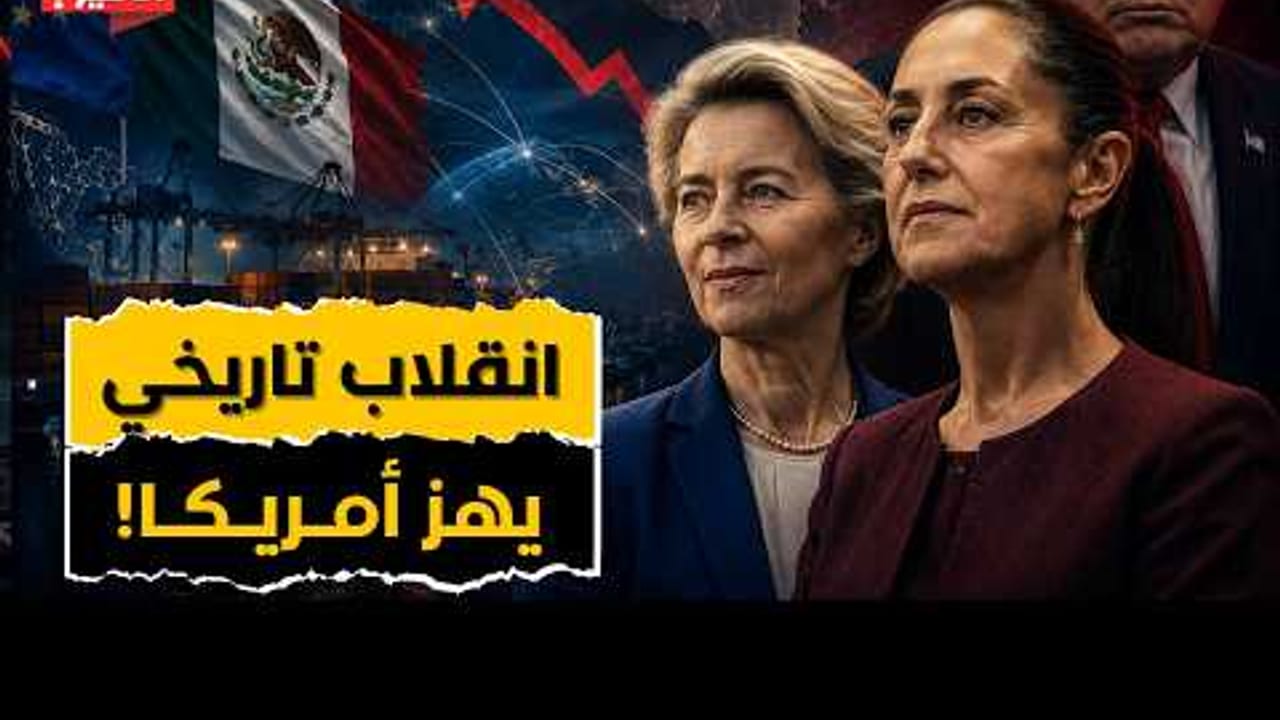
The European Union and Mexico have concluded an expanded trade agreement after prolonged negotiation delays, marking a substantial reordering of global economic alignments. The signing reflects accelerating efforts to rebuild supply chains and diversify economic partnerships, particularly as renewed trade pressures from the United States emerge under a new administration.
Agreement scope and strategic dimensions
The new accord extends beyond traditional tariff elimination to encompass multiple strategic elements. The agreement covers digital trade, strategic minerals, energy sector engagement, investment frameworks, and global supply chain integration. It also establishes rigorous standards related to labour rights and climate commitments, reflecting a widening trend toward embedding social and environmental criteria within trade arrangements.
Strategic minerals occupy particular prominence in the agreement, as Europe seeks to secure supplies of critical raw materials independent of concentrated Asian supplier relationships. This orientation reflects lessons drawn from the 2021–2022 European energy crisis and the accelerating industrial transition toward renewable energy and clean technology sectors.
Geopolitical and economic context
The timing of the agreement signals a fundamental recalibration in political confidence between Europe and the United States. Historically, Europe has anchored its economic and security stability on deep ties with America, yet a sequence of developments—from US withdrawal from international agreements to the weaponization of sanctions—has eroded this foundational assumption.
Mexico faces a distinct but complementary dynamic. The country is economically integrated with the United States through the USMCA (formerly NAFTA) framework, which channels approximately 80 per cent of its exports to the American market. However, near-total dependence on a single market exposes the Mexican economy to fluctuations in US policy and protectionist tariffs. The EU agreement represents a longer-term diversification strategy to reduce this concentration risk.
Shift toward multipolar trade architecture
The agreement reflects a broader trend in the global economy toward restructuring the multilateral trade system. While the previous model depended on clear American dominance, the world is moving toward a multipolar pattern characterized by:
- Independent regional blocs (European Union, BRICS, MERCOSUR)
- Individual countries building diversified trade portfolios rather than relying on a single power
- Acceleration of de-dollarization efforts and transition toward alternative payment mechanisms
- Reassessment of economic autonomy as an element of national security
Impact of Ukraine conflict and structural crises
Russia's 2022 invasion of Ukraine served as a watershed moment for European policymakers in recognizing the costs of single-power dependence. The crisis exposed vulnerabilities in European energy chains and misaligned geopolitical risk distribution. European energy prices surged to two or three times global benchmarks, forcing European firms to reassess their competitive positioning.
Additionally, post-COVID supply chain disruptions (2021–2023) compelled deep reconsideration of manufacturing resilience and economic flexibility. Multiple economies recognized that prioritizing efficiency without reserves exposes them to sudden shocks.
| Element | Pre-agreement | Post-agreement |
|---|---|---|
| European trade dependence on United States | Core strategic relationship | Parallel diversification with new partners |
| Strategic mineral procurement | Primary reliance on Asian suppliers | Diversified sources including Latin America |
| European energy autonomy | Weak and dependent on hostile suppliers | Enhanced partnerships across multiple sources |
| Exposure to unilateral US tariffs | Clear risk without viable alternatives | Alternative trade options available |
Political reactions and future risks
The agreement is likely to encounter political pressure from the United States, particularly if the American administration interprets it as an "economic axis" directed against US interests. Escalating US protectionism could accelerate global economic fragmentation rather than ameliorate it.
Mexico's risks remain elevated in particular. The United States remains a core trading partner, and recent signals from Washington regarding increased tariffs or USMCA renegotiation may cast a shadow over the long-term benefits of the EU accord.
Outlook and forward trajectory
The agreement points toward an inevitable debate over the future structure of the global trade system. Nations are no longer accepting a bipolar model of American-led versus Chinese-led blocs; instead, they are constructing a third band of flexible economic coalitions. This shift may produce a more fragmented and complex global economy, yet potentially more resilient over time if grounded on principles of mutual benefit.
For policymakers and investors, close attention to this strategic reorientation is warranted, given its implications for capital flows and long-term returns in sectors including energy, technology, minerals, and heavy industry.