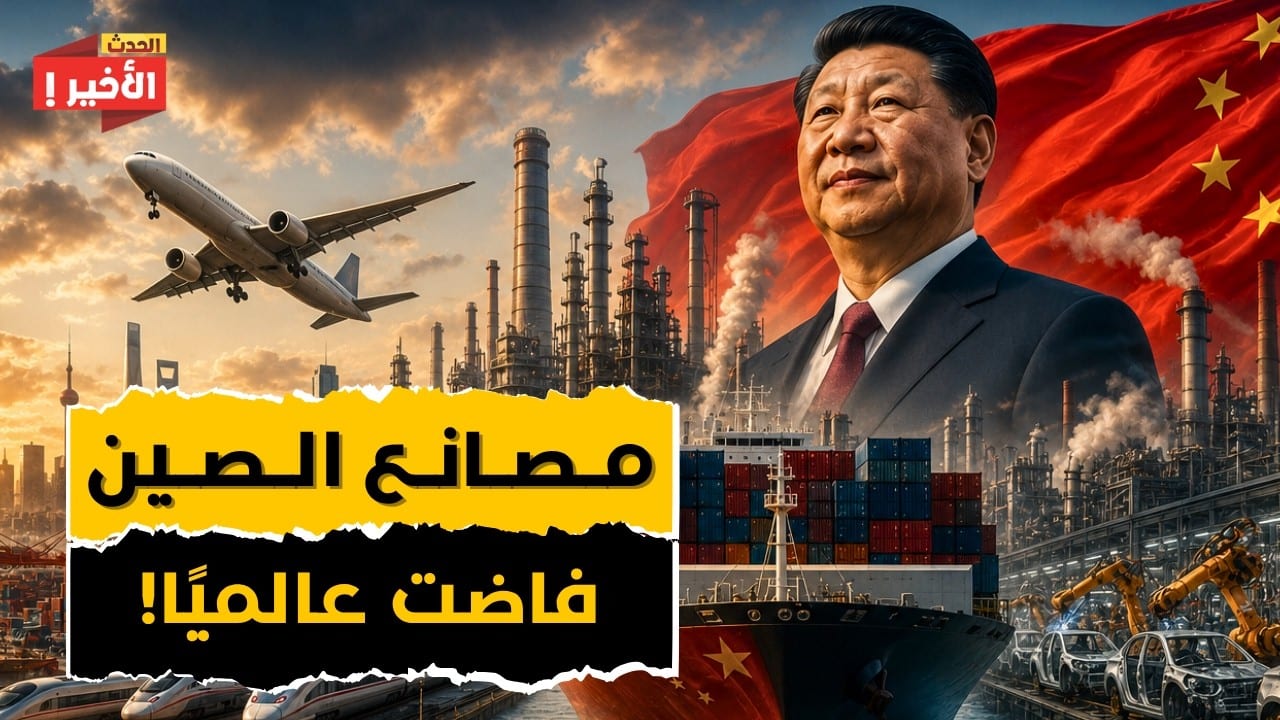
China recorded a historic trade surplus of $1.18 trillion in 2025, surpassing all previous records despite mounting American tariffs and Western sanctions. This surplus equals the gross domestic product of mid-sized nations, reflecting a fundamental shift in global trade geography rather than a collapse of the Chinese economic model.
Geostrategic redirection of exports
Despite the ongoing U.S. trade war and elevated tariffs on Chinese products, overall Chinese exports have not declined but instead shifted toward alternative markets. The Chinese economy has redirected productive capacity toward Europe, Southeast Asia, Africa, and Latin America, where markets are less protected and hungry for industrial and consumer goods.
This strategy reflects sophisticated understanding among Chinese policymakers of the new global balance of power. Rather than confronting sanctions directly, China has expanded its trade partner base, dispersing risk and deepening economic dependence on its exports across new regions.
Dominance of green and heavy sectors
Chinese exports increasingly concentrate on high-value and technology-intensive sectors, notably:
- Electric vehicles and batteries: Companies such as BYD have become major global players, capturing growing shares in European, Middle Eastern, and South Asian markets
- Solar panels and renewable energy: Chinese control of supply chains from raw production to finished goods
- Steel and industrial machinery: Rising global demand for infrastructure and manufacturing
- Electronics and semiconductors: Offsetting losses through specialization in segments less affected by sanctions
| Sector | Estimated exports 2024–2025 | Annual growth rate | Key markets |
|---|---|---|---|
| Electric vehicles and batteries | $180+ billion | 35–45% | Europe, Middle East, Southeast Asia |
| Solar panels and clean energy | $120+ billion | 25–35% | India, Brazil, EU member states |
| Steel and processed raw materials | $200+ billion | 8–12% | Asia, Africa, Latin America |
| Industrial machinery and equipment | $150+ billion | 15–20% | Developing world, Asia |
Hidden domestic crisis: consumer weakness
The massive trade surplus reflects structural imbalance in the Chinese economy as much as export strength. Contributing factors include:
- Real estate sector collapse: Declining property investment and mortgage lending have weakened domestic demand for goods and services
- Weak consumer consumption: Declining confidence among Chinese consumers and preference for savings over spending
- Structural production overcapacity: Chinese factories operate above desired capacity levels, forcing products into foreign markets
- Extraction and energy price pressures: Attempts to support margins through volume rather than unit value
This dynamic reveals a sobering reality: a massive trade surplus may signal warning signs of incipient domestic recession rather than economic health.
Escalation of global industrial conflict
Surging Chinese exports have fueled trade disputes across multiple fronts.
American position
Traditional U.S. tariffs have failed to restrain Chinese exports due to China's capacity to redirect and diversify channels. The current U.S. administration is considering broader measures targeting supply chains and Chinese investments in American markets directly.
European position
The European Commission has imposed additional tariffs on Chinese electric vehicles, citing dumping and unfair government subsidies. Nations such as Germany and France fear erosion of their industrial base, particularly as Chinese batteries and electric motors cost 30–50% less than European equivalents.
Global trade protection expansion
Protective measures are widening to include India, Vietnam, and South Korea in efforts to curb Chinese imports. This reflects genuine concern about Chinese monopolization of critical sectors.
Chinese strategy: production and investment relocation
To circumvent trade barriers and tariffs, Chinese companies have begun relocating production lines to third countries. Key destinations include:
- Vietnam: Has received billions in Chinese investment in electronics and automotive manufacturing
- Hungary and Eastern Europe: Production hub for batteries and electric vehicles serving European markets
- Turkey and Mexico: Intermediaries serving European and American markets respectively
- India: Strategic partnerships in solar energy and battery production
This strategy achieves three objectives: avoiding tariffs, maintaining control of supply chains, and deepening host-country economic dependence.
Balance in global supply chains
Despite Western efforts at "de-risking" and "democratic partnerships," China remains essential to most global supply chains:
- 60–80% of lithium batteries are manufactured or processed in China
- 70% of solar panels originate from China or Chinese-owned factories abroad
- 40% of global container ships are built in China
- 35% of processed rare earth elements are located in China
These figures underscore an uncomfortable truth: complete decoupling from China is not a viable option in the medium term.
Outlook: competing blocs and structural risks
The global economy is gradually fragmenting into competing trade blocs.
Western bloc: Pursuing alternative supply chains through "trusted partners," but this requires years of investment, not weeks. efficiency and cost gaps remain in China's favor.
Chinese trajectory: Depends on deepening economic dependence in Asia, Africa, and Latin America. Belt and Road 2.0 becomes a tool for trade expansion rather than infrastructure investment alone.
Structural risks: The massive trade surplus masks domestic weakness. If China cannot rebalance its economy toward internal consumption and reduce export dependence, it may face hidden unemployment and domestic stagnation in coming years.
The fundamental reality is that global industrial conflict has not ended but transformed. Neither tariffs nor sanctions have halted the Chinese machine—they have reshaped it. The question is not whether China remains the world's factory, but on what terms and at what cost to the rest of the world.