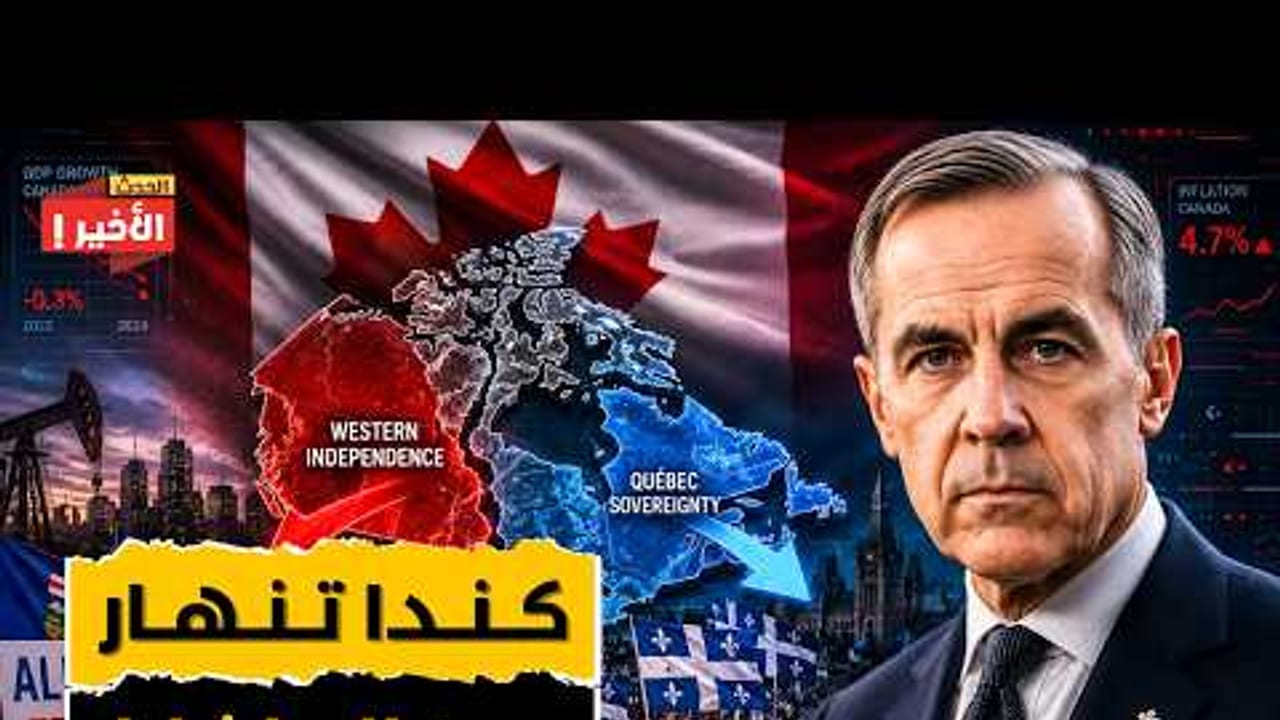
Canada confronts one of the most intricate political and economic crises in its modern history, as separatist movements gain traction across strategic provinces while confidence in the federal mechanism that has maintained national unity for more than 150 years erodes. The threat extends beyond marginal movements, reflecting instead a structural crisis rooted in the unequal distribution of economic resources and political power among the provinces.
Historical Roots: A Century of Structural Divisions
The Canadian internal conflict traces to the Confederation itself in 1867, when the United Kingdom consolidated diverse territories into a federal union intended to achieve political stability and economic development. However, that union failed to resolve fundamental differences between linguistic and cultural groups, particularly between Anglophone and Francophone populations. While western provinces gradually integrated into a unified Canadian economy, Quebec maintained its distinctive Francophone identity, creating persistent sensitivities around the preservation of French language and culture.
At the economic level, a clear divide developed: resource-rich regions, particularly Alberta with its oil and gas wealth, began to perceive the federal mechanism as redistributing their prosperity toward other areas. Simultaneously, Quebec felt mounting threats to its linguistic and cultural identity within an economic framework dominated by English speakers.
The 1995 Referendum: A Watershed Moment
Quebec's independence referendum in 1995 constituted a dramatic turning point in the Canadian context. The separatist movement achieved a startling result of 49.4 percent of votes, with the option to remain within Canada securing 50.6 percent—a margin of less than a single percentage point. The referendum demonstrated that division was not marginal but reflected genuine desire among a substantial portion of the population for independence, raising acute questions about the viability of federal union.
Federal policymakers recognized that the crisis transcended emotional grievance, rooted instead in legitimate concerns about cultural identity and economic autonomy. Since that event, the federal government has attempted to address economic and cultural issues to mitigate separatist pressures, though results have remained limited.
Modern Separatist Movements: The Rise of "Wexit" in the West
While Quebec remained in the spotlight, a new separatist wave emerged in western Canada, particularly in Alberta. The "Wexit" movement (Western Exit) gained considerable momentum in recent years, driven by a growing sense that the economic interests of western Canada are being sacrificed for federal policies oriented toward the east.
The primary driver of this discontent is the oil and gas sector. Alberta possesses vast petroleum reserves, estimated at approximately 165 billion barrels, yet federal policies aimed at reducing carbon emissions and transitioning toward clean energy have negatively affected sector investment. Alberta residents believe they fund the federal union through their oil wealth while other regions, particularly Quebec, receive substantial federal transfers. This perception fuels resentment and strengthens separatist sentiment.
| Province | Key Economic Issues | Separatist Support Level | Geopolitical Context |
|---|---|---|---|
| Quebec | Francophone identity preservation; fear of cultural assimilation | Very high (1995 referendum: 49.4%) | Largest Francophone province; limited resources; dependent on federal transfers |
| Alberta | Control of petroleum wealth; federal climate policies | Rising (Wexit movement) | Leading oil and gas producer; perceives unfair fiscal arrangements |
| British Columbia | Environmental policies; energy and port issues | Moderate | Strategic ports; disputes over infrastructure and trade relations |
| Ontario | Economic balance; central influence on federal decisions | Low | Largest regional economy; benefits from current federal structure |
Compounding Economic Crises: Inflation, Housing, and Employment
Political crisis intersects with significant economic crisis, amplifying anger and frustration. Canada experienced elevated inflation rates in recent years, reaching 8.1 percent in 2022 according to Statistics Canada official data, eroding consumer purchasing power and undermining economic stability.
A housing crisis deepened discontent, particularly in major regions. Property prices surged sharply, making affordable housing an elusive dream for younger generations. This situation prompted Canadian youth to question the value of remaining in an economy perceived as inequitable and exclusionary, reinforcing separatist sentiment especially among those viewing their regions as unfairly excluded from national economic benefits.
Unemployment and underemployment present additional challenges, particularly in provinces dependent on extractive industries. Federal government decisions to reduce investment in oil and gas to meet climate targets have left thousands of workers in these sectors facing uncertainty.
Oil and Gas: The Geopolitical Flashpoint
Canada's energy sector represents the acute pressure point between federal objectives and regional interests. Canada holds the world's second-largest oil reserves after Venezuela according to International Energy Agency reports, yet the vast majority lie in Alberta and Saskatchewan.
Canadian policies targeting carbon neutrality by 2050 have constrained new petroleum extraction investment and pipeline expansion. Legislation such as Bill C-311 imposes carbon taxes and limits new investments in fossil fuels. While these policies advance global climate goals, they have provoked deep resentment in Alberta, which views the federal government as sacrificing its economy for a green agenda.
Other oil-producing nations such as Saudi Arabia, the United Arab Emirates, and Norway have benefited from production expansion during the same period, while Canada remains constrained by domestic regulations. This disparity has redirected international investment away from Canada toward jurisdictions perceived as more regulatory stable.
Geopolitical Implications: Advantage United States?
Washington monitors the Canadian crisis with increasing attention. A collapse of Canadian unity would not constitute merely a disaster for American interests; it could present a strategic opportunity within the context of geopolitical competition with China.
Canada serves as a strategic NATO ally and principal trading partner under USMCA (the United States-Mexico-Canada Agreement). A fragmentation of the Canadian state could disrupt vast supply chains and splinter the unified market that has delivered substantial economic efficiencies.
However, Alberta's separation, or even Quebec's, could enhance American access to Canadian natural resources on more favorable terms. Smaller separatist states would likely possess reduced bargaining power against American economic might. Moreover, political turmoil could weaken Canada's negotiating position in commercial and security discussions.
Internal Balances: Rights Versus Decentralization
Federal government efforts to address these crises have relied on several mechanisms: expanding provincial authority over certain issues, providing economic incentives to affected regions, and strengthening policies protecting Francophone culture and identity. Yet these measures have not addressed root causes of tension.
The structural problem lies in the requirement for radical rebalancing of Canadian federalism. Western provinces demand greater control over natural resources, while Quebec seeks stronger guarantees of identity protection. Resource-poor regions depend on federal transfers, creating a complex political equation.
Plausible Scenarios and Outlook
Three principal scenarios shape Canada's medium and long-term trajectory:
- Scenario One: Federal Reform—Canada might avoid fracture through deep reforms to the federal structure, including more equitable resource distribution, expanded provincial authority, and stronger guarantees of linguistic and cultural rights. This scenario demands robust political leadership and difficult compromises.
- Scenario Two: Partial Separation—Provinces such as Alberta or Quebec might achieve increasing autonomy or even complete independence. This could unfold peacefully through referendums and constitutional agreements, or involve political conflict and disorder.
- Scenario Three: Stagnation and Decline—Failure to address economic and political crises could trap Canada in a spiral of instability, accelerating economic deterioration, deeper divisions, and reduced international influence.
The most probable near-term outcome appears to be limited reform coupled with persistent tensions. However, underlying economic and geopolitical forces are driving radical transformation of Canada's state structure.
Broader Context and Investment Implications
Canada's federal crisis reflects a wider phenomenon unfolding across developed nations: the rise of regional nationalism and skepticism toward traditional federalism. From Brexit in Britain to independence movements in Catalonia and Scandinavia, the model of large unified states appears subject to fundamental reassessment.
For investors and policymakers, Canada's political instability poses significant concern. State fragmentation could disrupt supply chains, weaken the Canadian dollar, heighten geopolitical risks, and reshape trade and energy arrangements across North America. Close monitoring of Canadian developments has become essential to strategic economic and policy analysis for years ahead.